PSELIB

Discover our eLibrary with AI-Powered Search

Ask questions and get detailed, sourced answers from our digital library curated by Genius Saeculi. Explore thousands of articles, research papers, and expert insights.

1,000+ Articles
AI-Enhanced Search
Verified Sources
Open Access Content

Museo Spazio PubblicoThe Journal of Public SpaceCity Space ArchitecturePublic Space AcademyMastering Public Space
Verified Open Access Sources, curated by Genius Saeculi
Featured Contents

Discover the latest insights from our curated collection

Public Space, Infrastructure, Landscape: an interdisciplinary matrix for  urban spatial continuity
Infrastructure
Public Space
Systems
Design
Urban Morphology
Research
Feb 28, 2017

Public Space, Infrastructure, Landscape: an interdisciplinary matrix for urban spatial continuity

Spatial growth of cities corresponded to new theoretical and practical knowledge capacities with new kinds of urban infrastructures, new services organisation and new construction methods, of XIX and most of XX century’s industrial space production. The decline of those capacities and a “crisis” of modern models, followed by the still on-going post-industrial transition process of the past 50 years are translated in many different forms of spatial, social, economic and cultural organisation and diversity of emerging urban contexts. Contemporary processes seem to carry difficulties in understanding and conducting urban transformation in such diverse and changing context. What strategic elements can be used to interpret and act in such contexts?In this paper we intend to show an interdisciplinary perspective of public space as part of strategic and theoretical principles recognised by several fields of urban knowledge and practice: we include the spatial continuity of the Commons in those structuring principles, as a notion of urban “publicness”. These new perspectives require a perception of public space that goes beyond traditional city references, to other peripheral or scattered urban areas, but maintaining its fundamental structuring role, as systemic and interactive reference for complex urban environments. Through a study on the specific case of the South Bank of Lisbon Metropolitan Area, we present a conceptual operative matrix, based on the hypothesis of strategic interaction between urban systems, aiming for its structuring potential for spatial continuity – public space, infrastructure and landscape.Outputs of this study aim at a contribution to a more flexible and interactive structuring approach to urban design and planning, focused on interdisciplinary perspectives of public space production. Vol. 2 No. 1 (2017) Keywords: public space, infrastructure, landscape, interdisciplinary, spatial continuity
The Journal of Public Space
2 min read
Public Space in Kuwait: From User Behaviour to Policy-making
Middle East
Selected Readings
Apr 5, 2022

Public Space in Kuwait: From User Behaviour to Policy-making

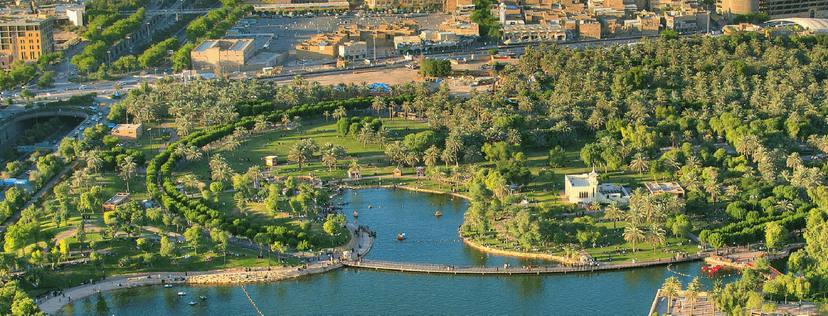
Developing a Method for the Analysis of Public Space in Kuwait’s Residential Neighbourhoods Kuwait’s urbanisation patterns are leading to higher levels of motorisation with negative impacts on individual health and the environment. As a consequence, re-evaluating urban development mechanisms becomes extremely vital. This project addresses the need for significant change in planning urban public space that would influence healthier individual behaviour and environmentally-friendly mobility patterns. Building upon the Resource Urbanisms project, this exploration is the result of early investigations on the relationship between the built environment and the use of public space. With the World Health Organization appealing for an increase in physical activity of individuals, this project will explore the impact neighbourhood layout and urban design elements have on outdoor activities and individual behaviour. It aims to examine the variables that generate liveable and successful public space and propose methods to integrate these results into evidence-based policymaking, for more sustainable urban development in Kuwait. Two neighbourhoods in Kuwait will be explored to define the tools that would promote the necessary change. Principal Investigators: Alexandra Gomes and Dr Asseel Al-Ragam Duration: January 2019–February 2022 Read about the project on LSE Middle East Centre Recommended by Luisa Bravo
Mastering Public Space
1 min read
The Future of Cities
Urban Dynamics
Global
Technology & Digital Media
Apr 17, 2025

The Future of Cities

What does “the future of cities” mean? To much of the developing world, it might be as simple as aspiring to having your own toilet, rather than sharing one with over 100 people. To a family in Detroit, it could mean having non-toxic drinking water. For planners and mayors, it’s about a lot of things — sustainability, economy, inclusivity, and resilience. Most of us can hope we can spend a little less time on our commutes to work and a little more time with our families. For a rich guy up in a 50th floor penthouse, “the future of cities” might mean zipping around in a flying car or having a pizza delivered by drone. For many companies, the future of cities is simply about business and money, presented to us as buzzwords like “smart city” and “the city of tomorrow.” Oscar Boyson started shooting the “The Future of Cities” as a collaboration with The Nantucket Project, but it really took shape when hundreds of people around the world responded to a scrappy video he made asking for help.
Public Space Academy
1 min read
Rhizoma Lab / Back to the Future of Public Space: Postcards from 2020
Architects
Nov 21, 2021

Rhizoma Lab / Back to the Future of Public Space: Postcards from 2020

2020 has challenged our ways of living and making sense of the world, it drove us to rethink our daily life in both the private and public sphere. Public space has especially been questioned: our understanding of it and the way we use it have been completely revolutionised while we are still making sense of this shift. However, this challenge has opened up to new interpretations and evaluations of public space. At the end of 2020 the research and design practice Rhizoma Lab launched a Call for Postcards to explore this matter, inviting architects, artists, designers, and activists to reflect upon the paradigm shift happening in our cities, observing and documenting the changing everyday praxis of inhabiting public space as well as envisioning its future, capturing those reflections and ideas in a Postcard. The format is a provocation per se , as it encapsulates the idea of travelling - the action forbidden by the pandemic. The call led to the exhibition titled “Back to the Future of Public Space: Postcards from 2020” which has travelled virtually and physically around the world becoming an observatory of practices, perspectives, memories, and futures currently shaping public space. Before landing at the Public Space Museum in Bologna, the exhibition was displayed in Australia (Deakin University, April 2021), in the US (Virginia Tech, September 2021) and digitally at MAB20 (Media and Architecture Biennale 2020, July 2021). The exhibition is born as a collective narrative responding to the theme and the proposed call, therefore, we invite the audience attending the exhibition at the Museum of Public Space to actively participate with their own postcard, contributing to the expansion of the observatory on public space. www.rhizomalab.com Rhizoma Lab / Back to the Future of Public Space: Postcards from 2020, Museo Spazio Pubblico, 21 November - 31 December 2021 Rhizoma Lab is a design and research lab founded by Dr Dorotea Ottaviani and Dr Cecilia De Marinis based in Rome and Melbourne. Cecilia and Dorotea are architects, researchers, and educators, who have developed their professional and academic career internationally in several universities in Europe, Australia, the US, and South Africa, among others: RMIT (AU), Virginia Tech (USA), Deakin University (AU), University of Johannesburg (SA), Roma Tre (IT), Sapienza (IT) and Glasgow School of Art (UK). Rhizoma investigates the spatial and experiential dynamics of art and architecture, especially focusing on public space and how people use, enjoy, and transform it. In March 2020, Rhizoma was appointed as Advisor on Public Space for the cultural association “City Space Architecture”.
Museo Spazio Pubblico
3 min read
Public Space in Cape Town
Health & Wellbeing
Natural Disasters & Resilience
Public Space
Ecology & Environment
Case study
Urban Typologies
Dec 30, 2022

Public Space in Cape Town

It's not about Design Public space ‘failure’ is often attributed to ‘poor’ design. Perceptions such as these open the way for vanity projects at the expense of interrogations of the less glamorous issues that may lead towards practical solutions. Design over-emphasis and the notion that open space is a ‘nice to have’, further detracts from its many important roles, particularly for vulnerable communities living in Cape Town.This article considers the challenges of delivering open spaces capable of playing multiple roles. Budget availability for maintenance and management, socio-economic issues, planning and institutional complexity and fragmentation, insufficient or incorrect community engagement, lack of inter-sectoral collaboration within professions, and single use design; are some of the challenges that underlie public space failure – in addition to design.Resolving these challenges is important because of public space’s critical role. Public space is the ‘glue’ that holds cities together. It is part of stormwater management, provides access to economic opportunities, improves safety, structures food access and agriculture and supplies ecological infrastructure for climate adaptation. Whilst design is not the biggest challenge, good design, appropriate norms and standards, integrated built environment practice, monitoring and evaluation metrics, can enable pathways for change necessary to affect a transition towards resilience. Vol. 7 No. 1 (2022): Public Space and Placemaking in African Cities Keywords: public space, parks, resilience, ecological infrastructure, urban health
The Journal of Public Space
2 min read
Video Analytics for the Assessment of Street Experiments: The Case of Bologna
Europe
Selected Readings
Oct 20, 2022

Video Analytics for the Assessment of Street Experiments: The Case of Bologna

In March 2022, Fondazione Innovazione Urbana and the Municipality of Bologna built a new public space for children in Via Procaccini (Bologna) near a middle school, using the approach of tactical urban planning and participatory design. The area chosen to build the new square was the subject of a mobility study conducted by Systematica and Transform Transport. The objective of the study was to monitor pedestrian and vehicular flows, with the aim of detailing specific patterns of space use. The monitoring was carried out through observations supported by a camera and video analytics techniques. The research produced a series of analyses related to observed flows in the area during the pre/ post-intervention phases. This was meant to support the iterative design process based on the tactical urbanism approach. Read the research on Transform Transport Recommended by Luisa Bravo
Mastering Public Space
1 min read